
When Self-Love Becomes Misunderstood
The idea of self-love has become increasingly common in recent years. People are encouraged to prioritise themselves, protect their peace, and do what makes them happy. In many ways, this shift is important. For a long time, many individuals were taught to neglect themselves emotionally while constantly focusing on responsibilities, expectations, or external validation.
But somewhere along the way, self-love also began to take on meanings that are sometimes misunderstood.
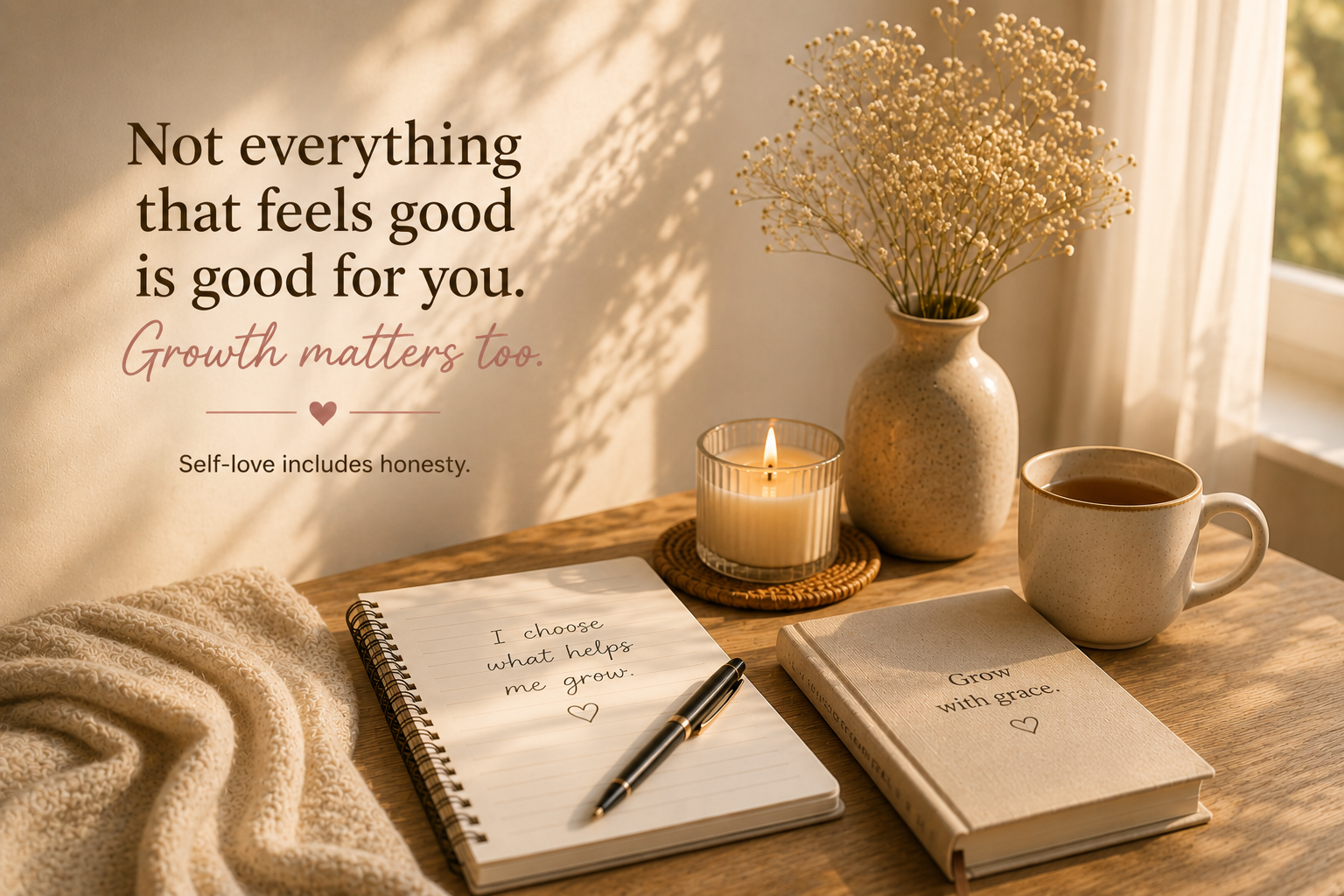
Not everything that feels comforting, validating, or pleasurable is necessarily an act of self-love. And not every act of self-love feels immediately comfortable in the moment.
This is where confusion often begins.
Self-Love Is Not Indulgence Without Awareness
There is a difference between caring for yourself and constantly giving yourself whatever you want in order to avoid discomfort.
Sometimes people associate self-love with overindulgence, emotional avoidance, or excessive self-protection. Avoiding accountability. Escaping difficult emotions. Constantly seeking temporary relief through spending, unhealthy habits, emotional dependence, addiction, or distractions that numb rather than heal.
These behaviours may provide short-term comfort, but they do not always create long-term well-being.
In many ways, it is similar to how a child develops over time. A child who is constantly overindulged without guidance may temporarily feel loved or satisfied, but slowly begins losing a healthy sense of balance in life. Over time, the child may struggle to tolerate disappointment, regulate emotions, consider the needs of others, or develop resilience when things do not go their way.
When every discomfort is removed too quickly, or every desire is constantly prioritised, the child may gradually become emotionally dependent on external gratification rather than learning inner stability. In some cases, this can also lead to a more self-centred way of relating to the world, where emotional comfort becomes expected rather than appreciated.
Not because the child was loved too much—but because love became disconnected from healthy nurturing, boundaries, emotional guidance, and the gradual development of emotional maturity.
Adults are not entirely different.
Real self-love does not mean removing every form of discomfort from your life. Sometimes it means learning how to face discomfort more honestly and responsibly instead of constantly escaping from it, so you can gradually navigate future challenges, disappointments, and emotional difficulties with greater resilience and balance.
When “Protecting Your Peace” Becomes Emotional Avoidance
There are moments when stepping away from unhealthy environments or relationships is necessary. Boundaries matter. Rest matters. Emotional space matters.
But sometimes, people begin using the language of self-love to avoid growth, difficult conversations, accountability, or emotional responsibility. In the process, discomfort itself can start being viewed as something entirely negative or harmful. But not every uncomfortable situation is toxic, and not every disagreement or emotional trigger should immediately be escaped from. Sometimes discomfort is revealing something important about ourselves—our fears, insecurities, emotional patterns, unresolved wounds, or the areas where growth and deeper self-understanding are still needed.
Self-love is not simply about protecting yourself from discomfort at all costs. Sometimes it is about understanding yourself deeply enough to sit with discomfort without immediately reacting to it.
Self-Love Is Not Constant Self-Prioritisation
There is also a misconception that self-love means always placing yourself first.
But healthy self-love does not remove consideration for others. It does not require becoming emotionally self-focused, dismissive, or disconnected from responsibility and relationships.
Real self-love often creates greater emotional balance, not less. A person who genuinely values themselves usually develops more self-awareness, healthier boundaries, clearer communication, and a stronger ability to care for others without constantly feeling depleted or resentful.
This is very different from using “self-love” as justification for impulsiveness, emotional avoidance, or disregard toward people around us.
Understanding Yourself More Honestly
Part of healthy self-love also involves knowing yourself more honestly and clearly. Your emotional thresholds, your natural tendencies, your values, the environments that affect you, and the kinds of habits or choices that genuinely support your well-being over time.
Without this awareness, people can sometimes adopt ideas of “self-love” that are heavily influenced by trends, emotional impulses, or external messaging rather than what is actually healthy and sustainable for their own growth.
What feels comforting in the moment is not always what helps you grow. And what works well for one person may not necessarily be right for another. This is why self-awareness matters so deeply. When you understand yourself more clearly—without excessive self-judgment or emotional bias—you become better able to make choices that are genuinely aligned with your long-term emotional balance, values, and personal development.
Moving Forward With More Clarity
Perhaps one of the biggest shifts is realising that self-love is not about constantly making yourself feel good. It is about learning how to relate to yourself in a healthier, more honest, and more sustainable way. Sometimes that involves gentleness and rest. Sometimes accountability, emotional restraint, discomfort, or change. Healthy self-love is not built around avoiding every difficult feeling, but around developing the emotional maturity to support your long-term well-being with greater awareness and balance.
Self-love is not the absence of discipline, responsibility, or emotional growth. In many ways, it is what supports those things most deeply.
When understood more clearly, self-love becomes less about indulgence and more about emotional alignment—making choices that genuinely support the kind of life, relationships, and emotional stability you want to build over time.
Through my work at The Mind Shifter, I guide individuals to better understand emotional patterns, self-awareness, and the deeper relationship they have with themselves—so growth becomes more grounded, balanced, and sustainable.