
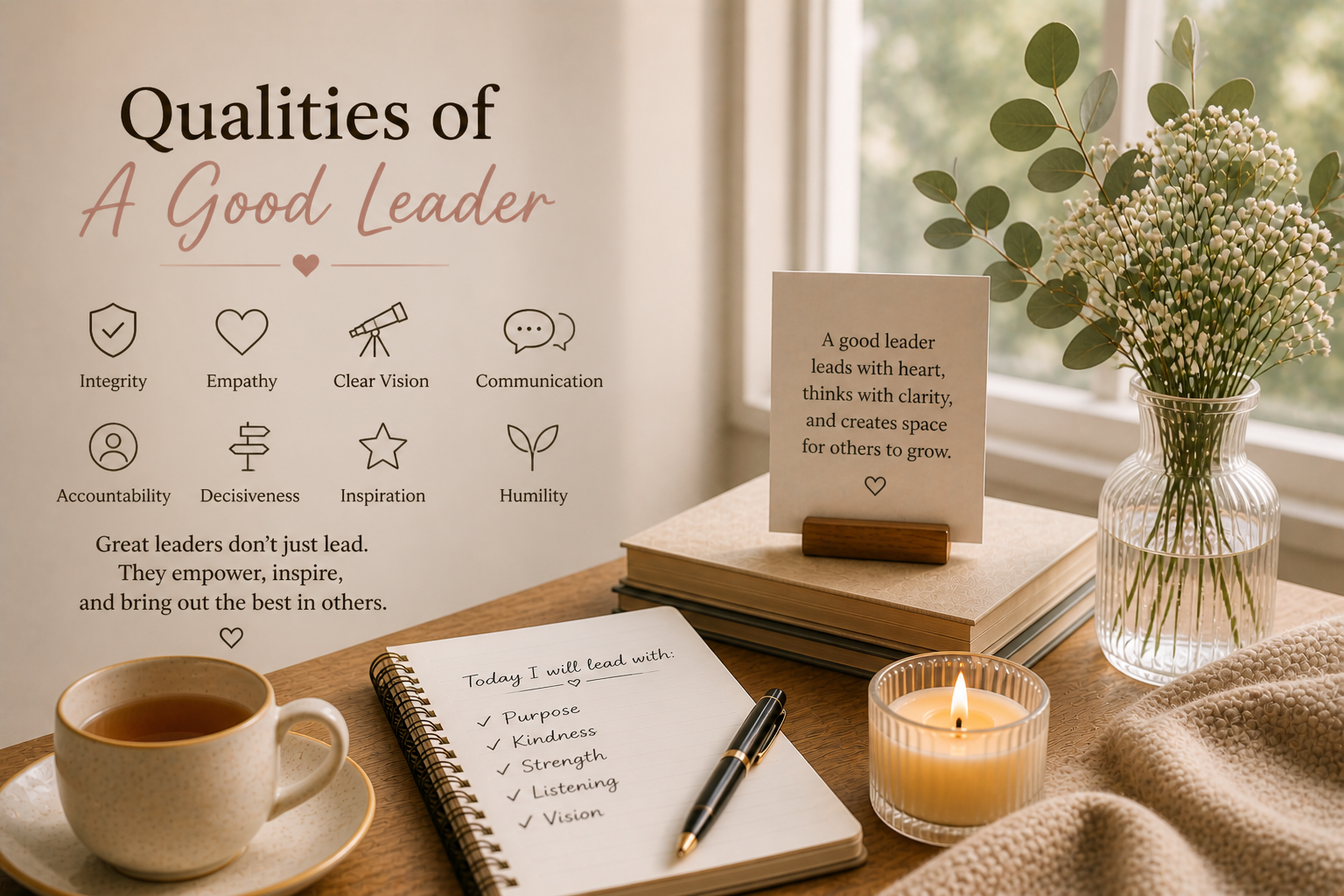
Leading with clarity, earning respect, and creating trust that lasts
Leadership Is Felt Before It Is Defined
You can usually sense a good leader before you analyse them. It shows in how people respond to them—whether there is trust, openness, and a willingness to follow, not out of fear, but respect. Leadership is not just about authority or position. It is about presence.
In today’s world, people no longer respond well to rigid hierarchy alone. They value authenticity, fairness, and clarity. Respect is no longer assumed—it is built over time. A good leader understands this shift. They don’t rely on control to lead; they rely on consistency in how they show up, how they communicate, and how they treat people.
Confidence That Grounds, Not Intimidates
Confidence is often misunderstood. It is not about being the loudest voice in the room or always having the final say. True confidence is steady. It shows in how decisions are made, how challenges are handled, and how a leader carries themselves, especially in uncertain situations.
When a leader is grounded in their decisions, it creates a sense of stability for everyone else. People don’t expect perfection—but they do look for clarity. A confident leader provides direction without creating fear, and assurance without dismissing others. This kind of confidence builds trust, not pressure.
Integrity and Transparency Build Real Trust
Trust is fragile, and once lost, difficult to rebuild. This is why integrity matters. A good leader is consistent in their actions, fair in their decisions, and clear in their intentions. People notice when words and actions align—and they also notice when they don’t.
Transparency plays an equally important role. It doesn’t mean sharing everything, but it does mean being honest about what affects the team. When people feel that information is withheld unnecessarily, uncertainty grows. When they feel included and informed, they feel respected. And when people feel respected, they are more willing to contribute fully.
Listening, Adapting, and Staying Open
Strong leaders are not rigid. They are open to perspectives beyond their own. The ability to listen—genuinely, without immediately correcting or dismissing—creates space for better ideas and stronger collaboration.
Good ideas don’t always come from the top. Sometimes, they come from the quietest voice in the room. A leader who is open-minded allows these ideas to surface. At the same time, adaptability becomes essential. Challenges change, people evolve, and situations shift. A leader who can adjust without losing direction creates resilience within the team.
Balancing Decisiveness with Patience
Leadership often requires making decisions that not everyone will agree with. Being decisive is important—but so is timing. Not every situation calls for immediate action, and not every delay is a weakness.
A good leader knows when to move quickly and when to pause. Patience allows space for better judgment, especially during uncertainty. Decisiveness ensures that progress continues. When these two are balanced, leaders are able to move forward without being reactive—and hold steady without becoming stagnant.